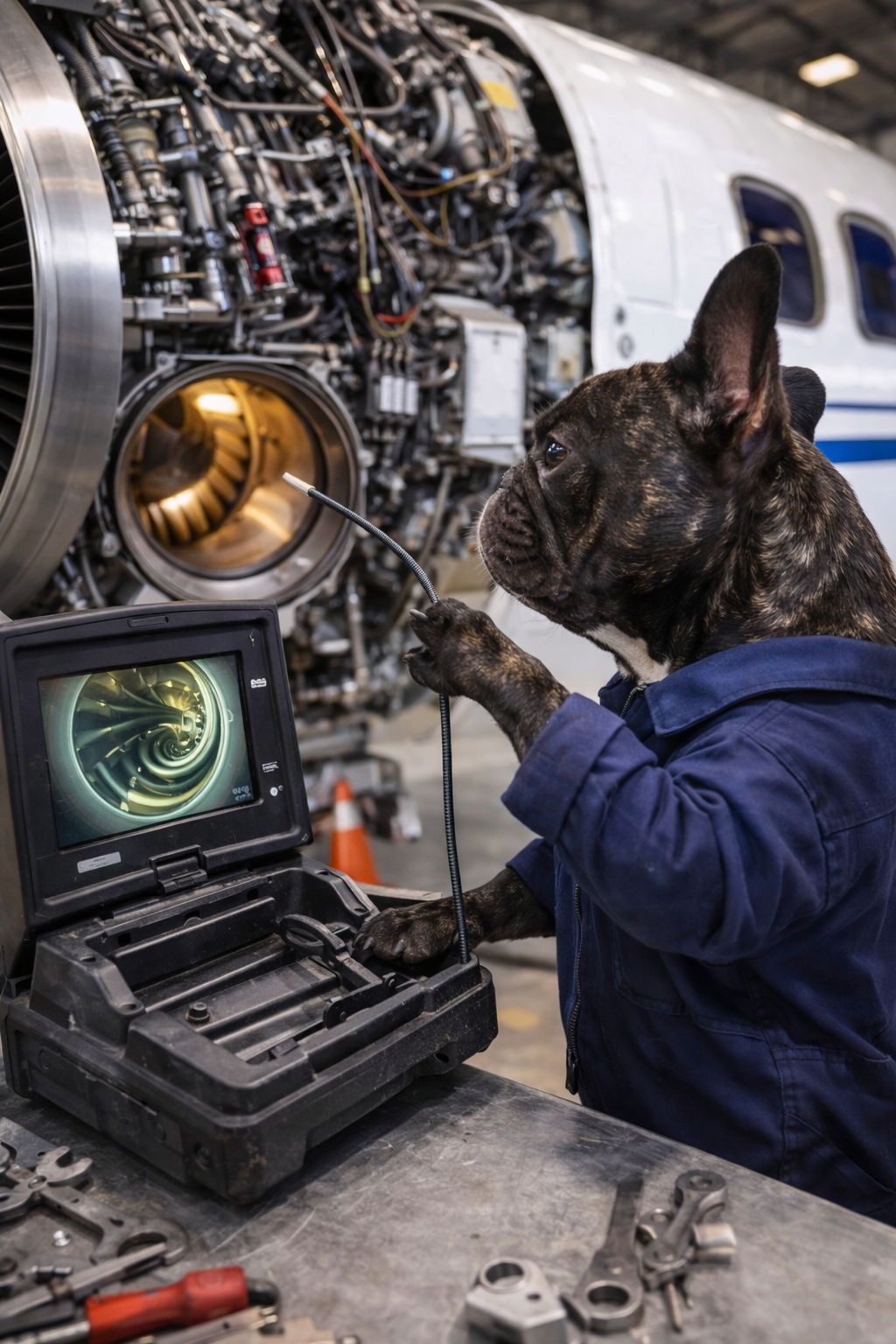
How Engine Inspections Are Performed in Practice
Engine inspections are often described in procedural terms, yet in practice they are a process of risk assessment, evidence gathering, and decision support. A meaningful engine inspection is not performed to produce a report, but to determine what an engine can realistically support next—continued operation, a shop visit, remarketing, or teardown.
In practice, engine inspections begin long before any physical access to the engine. The first step is a thorough records and status review, including build configuration, LLP status, AD and SB compliance, shop visit history, and operational utilization. This initial assessment sets expectations and identifies areas of technical or commercial sensitivity that require closer inspection. An engine with clean records but poor utilization history may present different risks than one with higher cycles but strong maintenance discipline.
Physical inspection typically starts with external condition assessment. This includes evaluation of preservation status, evidence of corrosion, handling damage, fluid leaks, and storage compliance. Engines that have been inactive, stored improperly, or exposed to harsh environments often reveal early indicators of future maintenance exposure during this phase. Conservative inspection assumes that visible deterioration reflects deeper underlying risk unless proven otherwise.
Borescope inspection is a central component of modern engine evaluation. Using high-resolution video borescopes, critical internal sections are inspected, including hot section components, compressor stages, turbine blades, and combustion areas. For engines such as the JT8D-217/219, CFM56, and V2500, borescope findings are interpreted in the context of known wear patterns, program-specific sensitivities, and remaining life assumptions. The objective is not to pass or fail the engine, but to understand probable repair scope and timing.
Inspection findings are never assessed in isolation. Visual observations are correlated with operational data, prior shop findings, and known program behaviors. For example, minor distress in a hot section may be acceptable in a run-out scenario but problematic if long-term operation is intended. Conservative inspection practice avoids optimistic assumptions and instead evaluates findings based on worst-case credible outcomes.